Dementia is a fairly common condition and it is quite possible that many of us have come across a person with dementia in our own families. Modern medicine is pushing the barriers of science and is helping people live longer. It is this increased longevity that is believed to increase the incidence of dementia. Having a few people of dementia in the family and seeing how disturbing it is for everyone else, I thought of writing an article to give some additional (and hopefully more clear) information for those who have to deal with patients of dementia. I had also recently read an article about foods that may help memory. But before we go into what dementia is all about, let me just talk about three people who have memory issues (Cognitive impairment).
The first patient is a 90yrs old who slowly started losing her memory about 10 yrs ago. It reached such a degree of severity that she couldn’t recognise her own daughter, would chase away her grandchildren and hide other peoples mobile phones when they came home. As things happened, she developed what is called a complete heart block about 5 years ago, for which she underwent a permanent pacemaker implantation theryby prolonging her life. Today her condition has deteriorated to an extent where she needs help for all activities of daily living including eating and cleaning up 24 X7!
The second patient is an 85yrs old who has been losing her memory slowly over the last 2 years. This lady had always been so happy, cheerful and positive that it was very difficult for some of her family to accept that she is losing her intellect. She would forgets names of people and had also started forgetting that she had already taken her meal. She would even joke that her maid was good enough to remind her that she has already eaten. She would cheerfully gives excuses for her lapses in memory and would repeat what she has said frequently during the conversation.
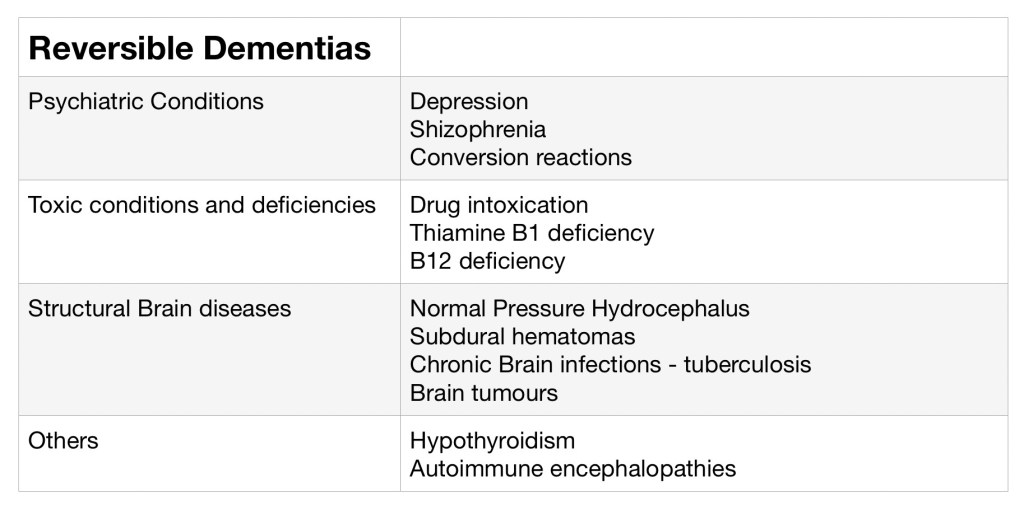
The third patient is a recently retired vice president for marketing of a large company who developed memory issues. He was particularly disturbed as he intended to continue work as a consultant in his field. He gave a history for a lifetime of smoking and drinking alcohol. He was started on medications after which he showed a significant improvement in memory and thinking. My diagnosis and that of the neurologist who saw him later, might have been wrong as dementia is usually a relentlessly progressive and irreversible disease.
So what is dementia?
Dementia refers to a progressive and permanent (irreversible) loss of intellectual function, severe enough to compromise normal functioning in society.
Dementia usually begins above the age of 60 years and may roughly be classified into three groups: early onset – below the age of 65 years, presenile – between ages of 65 and 75,and senile dementia – that occurs above the age of 75 years. This classification is not particularly useful other than to indicate that investigations are definitely warranted the younger the onset of memory loss.
I was reading a book recently where the author was describing the 4 ailments that affect longevity, as the 4 horsemen. They include Neurodegenerative disease (including Dementia), Cardiovascular disease (heart attacks and strokes), Diabetes and Cancer.
Alzheimer’s dementia is the commonest type(60-65%of all cases) of dementia and is quite uncommon under the age of 65 years. The incidence of Alzheimer‘s disease continues to increase as people get older.
The second most common cause of dementia is called vascular dementia and contributes 20 to 40% of all cases. This is a consequence of occlusion of the blood vessels of the brain causing dementia. Ischemic vascular diseases can reduce blood flow to critical areas of the brain reducing its capacity to process information. Hemorrhagic vascular disease due to high BP, trauma and other vascular abnormalities can affect brain function and cause dementia. Low oxygen levels can also damage the brain (as in patients with severe pneumonias seen during the recent Covid pandemic). This can also cause dementia and memory loss.
Diffuse Lewy body dementia can constitute 3.5- 7.5% of all cases and tends to present in people, 50 years and older. Sufferers would also have severe anxiety and psychiatric disturbances and have Parkinson’s features.
Frontotemporal dementia occurs in 2% of all the patients of dementia and is characterised by severe behavioural changes (disinhibition, hyper sexuality, impulsive with mood swings) speech and language disturbances such as reduced comprehension, reduced word output etc.
Dementia can also occur in association with Parkinson’s disease in the ageing population and heavy alcoholics (between the ages of 40 and 50 years).
Another common type of dementia seen is called Normal Pressure Hydocephalus which demonstrates a triad of dementia, gait abnormalities and urinary incontinence.
What are the signs and symptoms of dementia?
In dementia the brain function is progressively irrevocably and permanently lost. Typically people develop severe short term memory loss. Old memory (of the distant past) is retained until dementia progresses. People often forget names, things that they have eaten (and demand food soon after eating) and things that they hear etc.
People with dementia also have words finding and naming difficulties and quite often they may use pronouns or describe what a particular object is used for. Speech and language may be affected. Comprehension and word output may also be affected.
Many also suffer from visuospatial dysfunction when they may get lost in familiar settings and may get lost after going for a walk and may not be able to find their way back home. They could misjudge the distance of other objects in their path and knock them down when walking.
Executive dysfunction – The ability to carry out certain actions and organise their work may be seriously impaired. Poor judgement and easy distractibility is also seen.
Often, the sufferer may be apathetic and may withdraw into a shell. Frequently they have apraxia i.e., inability to perform a learned motor act in the absence of muscle weakness or sensory loss in the in a particular limb. For example, they may not know how to fold a newspaper or lock the door.
How is dementia diagnosed?
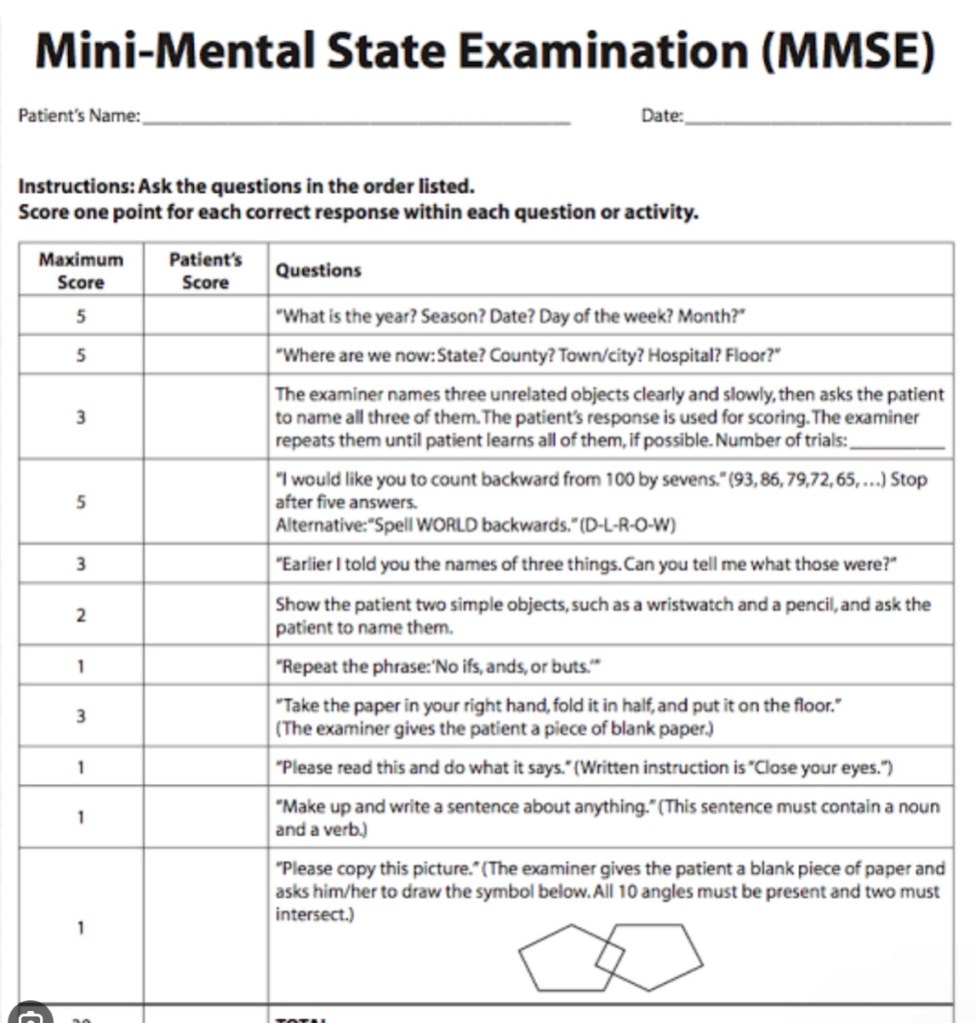
Many mental state examination (MMSE) can be done to assess the different components of a patient’s brain function where low scores (below 23) could indicate dementia. It is very easy to do this test and it can be repeated at a later time too.
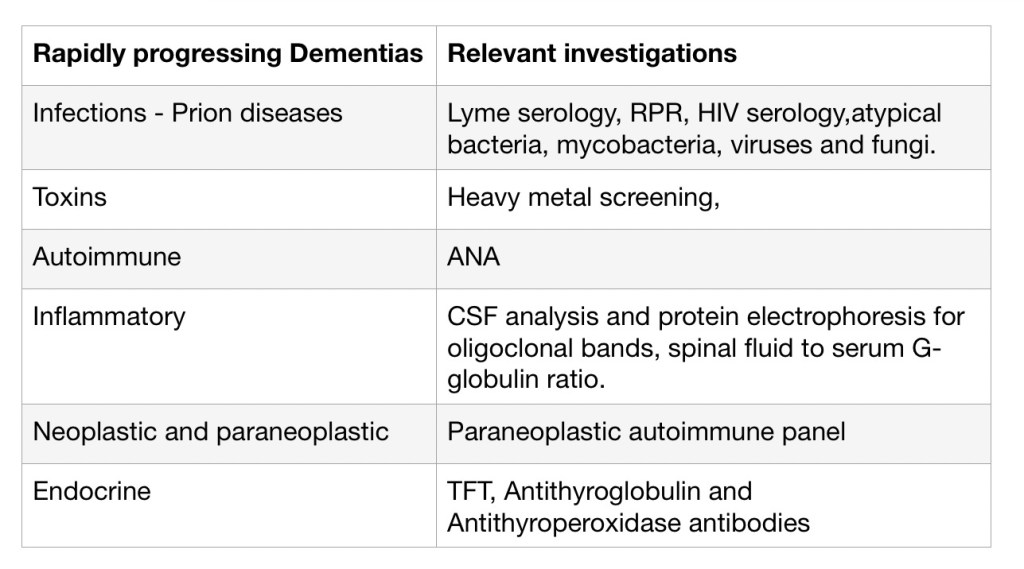
While there are no diagnostic test for dementia, variety of tests are done in order to exclude other causes for poor memory and to differentiate the different types of dementia.
Common blood test that are done are- complete blood count, ESR,CRP, liver function test, kidney function test, thyroid function test, vitamin B12 levels, serum ammonia, urine complete, rapid plasma region (RPR), and HIV serology, spinal fluid analysis, Chest X-ray and neuro imaging (CT scan, MRI brain scan, pet CT brain scan (FDG), EEG may be done at the doctors discretion.
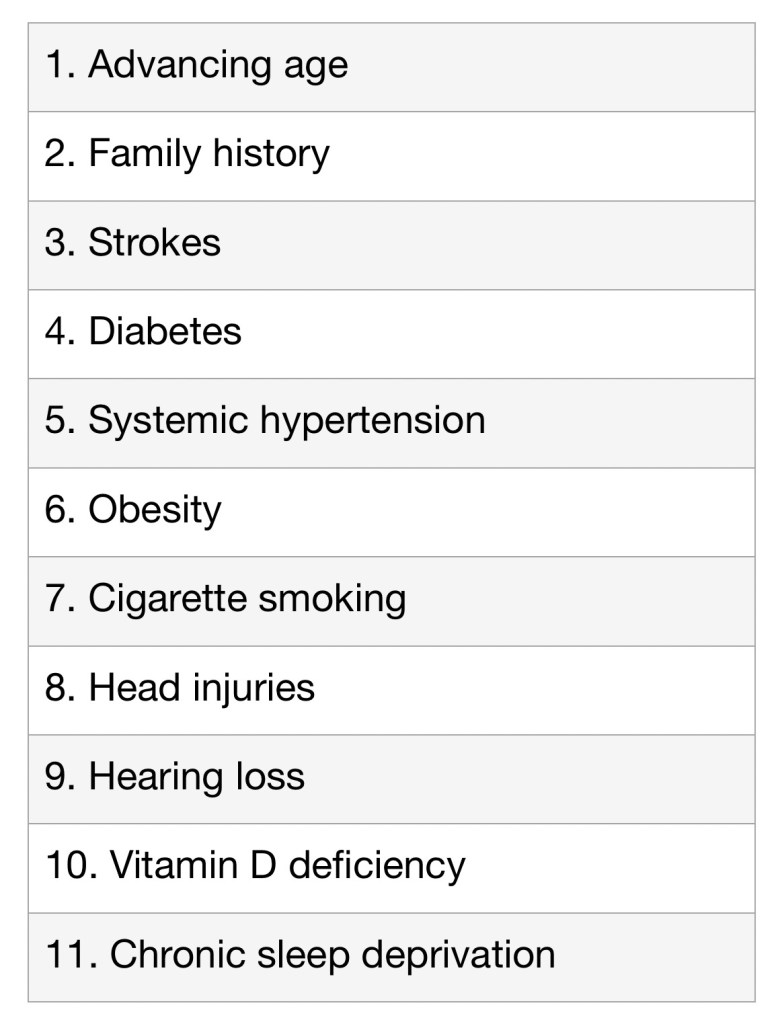
Risk Factors for Dementia
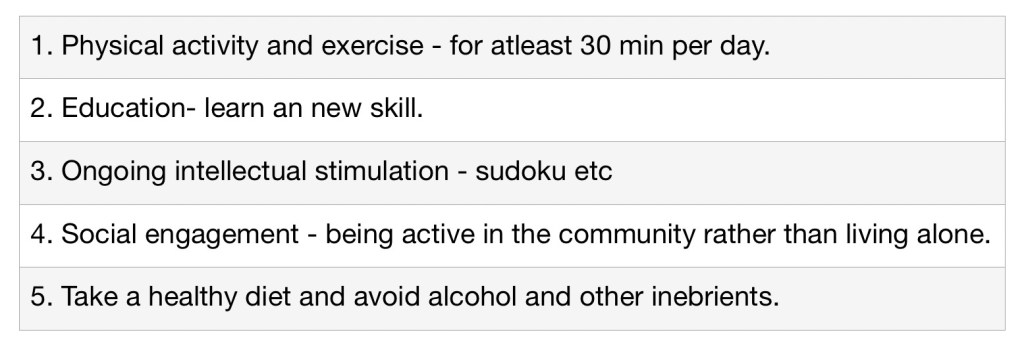
Factors that protect against Dementia
What else should someone with dementia do?
1.Help yourself to remember things. Ask if anyone else can help. Carry a notebook to write down things that need to be done, appointment that need to be kept. Use your phone or tablet to help you remember important dates.
2. Use a pill box to remind you of medicines that must be taken. Set an alarm on your phone to remeind you to take your pills on time.
3. Have your groceries delivered to you at regular intervals.
4. Avoid coffee or tea after 3 PM as this could affect your sleep. Develop the good habit of going to sleep at the same time every night. Reduce water intake and take your meds for you prostate regularly to avoid getting up after sleeping.
5. Keep a list of emergency phone numbers written down where it can be seen easily (on the wall). In case of an emergency display the contact number and name of your family member who should be contacted and who can come to help.
6.Keep a card in your pocket whenever you go outdoors mentioning your name, address and name of person (with mobile phone) who may be contacted in case of an emergency.
7. Make a will.
Foods that may be important to preserve memory!
There is evidence from recent study that increased intake of dietary flavonoids can boost memory and brain health. A recent study done in elderly people who took a higher amount flavonoids equal to one serving of green leafy vegetables per day had a 32% reduced decline in cognitive function. Three flavonoids are believed to be beneficial Kaempferol, Myricetin and Quercetin. Flavonoids can be found in vegetables such as onions, kale, lettuce, tomatoes and in fruits like apples, grapes, and berries, as well as in some teas and wines. In one study of 960 participants, average age of 81 years and followed up for seven years, they were required to to fill up an animal nutrition, questionnaire and complete shot in cognitive tests. The study found that one group had the lowest flavonoid intake (<5gm/day) and another had the highest flavonoid intake (15gm/day), the second group had a 32% lower rate of cognitive decline compared to the first group. They also found that ultra-processed foods, those high in sugar dairy products and salty fried foods upped the risk of dementia by 50%. Another study also showed that taking freeze dried cranberries equivalent to one cup of fresh fruit for 12 weeks was associated with improved memory in healthy middle aged and older adults. I have always believed that vegetarian food was healthier than a meat based one. I was quite happy to read this article which suggested that not only vegetarian food but had also identified the active component that brought about the beneficial effect.
What is the Prognosis of Dementia?
On an average a person with Dementia will live for 8-10 yrs.
 Dr Subash Rau - General Physician’s blog